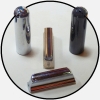
Can some of you experts out there explain for me the characteristics of metal that has been a)cast b)forged c)extruded and d)stamped.
Specifically, which metals can be used in which process, what that process is (in layperson's terms) and what are the pros and cons of metal processed that way --especially regarding the construction of steel guitars. [Sorry if this sounds like a midterm question! ]
Thanks!
--Ignorant in L.A
<FONT SIZE=1 COLOR="#8e236b"><p align=CENTER>[This message was edited by Greg Vincent on 22 May 2002 at 04:22 PM.]</p></FONT><FONT SIZE=1 COLOR="#8e236b"><p align=CENTER>[This message was edited by Greg Vincent on 22 May 2002 at 04:23 PM.]</p></FONT>
Well, let's see here. Casting is where the metal is heated up to it's liquid state and then poured into a mold, typically, and then allowed to cool to the finished product. Forged is when the metal is hammered. In the old days, iron was heated to yellow hot in a forge and them hammered into a shape on an anvil, or two pieces of iron were heated white hot and them hammered together as a forge weld. Now days the metal block, typically steel, is heated in a furnace and then held between the two dies of a mechanical hammer, which can be very huge, and smashed into the finished shape. Extruded is when a metal bar, like 6063 aluminum is rolled and forced through the dies and squished into the final shape. Stamped is where sheet metal gets "cookie cuttered" usually while it's cold. The shapes are punched out with dies.
The properties of cast metal vary widely depending on what kind of metal and what alloy is used. The pedals on your guitar, the end plates and the necks, if it's an older guitar, were most likely cast, as was the engine block, and the mirrors in your car. The axle in your changer is likely to be cold roll steel, which is an extrusion as are the aluminum angles and bars and perhaps the aprons and pedal bar. The keyhead on your Stringmaster was stamped. I can't think of any guitar parts that might have been forged.
Forging and extruding are the most violent followed by stamping where the crystalline structure of the metal is upset and crunched together. In steel, for example, the molecules are compressed tighter which makes it harder, especially on the surface. The fact that the metal is compressed during forging and extrusion means that internally it's under tension which might make it less resonant. Old cymbals, which are spun (forced over a shape), that have been played and have had time to age, sound more resonant than new cymbals because the crystalline structure has had time to relax. When I made necks for my Super Pro, I machined them out of aluminum tooling plate, which is a casting that has been flycut.
Chas. my good man,very good,very acurate
very understandable.One would get the impresion that you were/are an engineer
(not train driver)of sorts...LOL
You are one of the ones that can always be depended on for great info.
Gentlemen, thank you. Actually cold rolled steel as an extrusion is a bit of a stretch, it's more like a cold forging, but I had just finished talking about the heat and I didn't want to make a u-turn in the middle of the block.
I would also add as the pros and cons, before CNC, computer numerical control of machinery, casting was the easiest, read cost effective, way to produce complicated shapes. The cons of casting were/are porosity and contamination (there are elaborate ways to circumvent this, read expensive); now, many of the parts, keyheads, endplates, necks and some of the mechanical goodies underneith can be milled from blocks of aluminum, billet, on milling machines driven by computer controlled servos that have been programmed to cut those parts.
There is another way of mass producing complex shapes out of metal. Powdered metal can be pressed into complex shapes in a mold and then heated (sintering) which fuses the particles together. Therefore you can have the strength of a ferrous casting without expensive machining of a rough casting. Also, if the part is to be used where lubrication is required you can mix graphite with the powdered iron and the part will self lubricate as it wears.
Another interesting thing about the extrusion process is the euctectic points . That's a temperature range where the metal is not solid , and not liquid, kind of like jello. When a metal is in this state it can be forced through a die and make a long piece with a cross section the same as the die. I think most of the modern pedals on a psg are made like this. Another thing, if the part needs to resonate (neck for example), I think it should be manf. the same as a high quality bell, by casting.

 ]
]