Public Correction: Keyless vs. Keyed – I Was Wrong
For over three decades I have promoted a theory about keyed vs. keyless pedal steel guitars that turns out to be incorrect.
Specifically, I claimed that because a keyless guitar has much shorter string length behind the nut, its overall string length is shorter, and therefore — all else being equal (same gauge, same scale, same pitch) — it would require less total string tension than a traditional keyed instrument.
That is wrong!
The tension required to bring a string to pitch is determined by:
• Scale length (nut to changer)
• String gauge / mass per unit length
• Target pitch
The speaking length — the scale — is what matters. The extra string behind the nut (or behind the changer) does not change the tension required to reach a given pitch.
In other words:
A 24" scale keyless tuned to E with a .014p(*) has the same string tension as a 24" keyed tuned to E with a .014p.
(*) Edited March 8th. As some answers below will suggest, I inadvertedly type’oed o.o15 in my original post.
Physics doesn’t care how much string is hanging out behind the nut.
What is different — and what I failed to separate from tension — is system compliance.
A keyless guitar, having less non-speaking string length, has (everything else being equal):
1. Less total string stretch in the system.
2. Therefore less linear movement required at the changer to raise/lower pitch.
3. A perceptibly “stiffer” or less elastic pedal feel.
A keyed guitar, with more string length beyond the nut, has more total elastic material in the system. That does not reduce tension at pitch — but it does increase how much the string must be pulled to change pitch, and it feels slightly more compliant under the bar and pedals.
I conflated system elasticity with string tension.
That was my error.
What’s humbling is that I’ve repeated this claim for about 30 years, and was only gently questioned once years ago by someone whose technical instincts were clearly better than my certainty. I should have rechecked then.
Recently, while researching scale considerations for a new design concept I’m working on (which will incorporate a modified keyless approach), I revisited the math — and hit myself with an "Aha"-moment.
Let’s just say physics remains undefeated.
So — to anyone I may have confidently misinformed over the years — this is my correction.
Turns out even after three decades, you can still tune up your thinking.
Thanks!... JD
"Keyless" vs. "HeadStock"/"Keyed": A correction about something I believed to be true but wasn't
Moderator: Dave Mudgett
-
J D Sauser

- Moderator
- Posts: 3380
- Joined: 4 Aug 1998 11:00 pm
- Location: Wellington, Florida
- State/Province: Florida
- Country: United States
"Keyless" vs. "HeadStock"/"Keyed": A correction about something I believed to be true but wasn't
Last edited by J D Sauser on 8 Mar 2026 2:06 pm, edited 3 times in total.
__________________________________________________________
Was it JFK who said: Ask Not What TAB Can Do For You - Rather Ask Yourself "What Would B.B. King Do?"
A Little Mental Health Warning:
Tablature KILLS SKILLS.
The uses of Tablature is addictive and has been linked to reduced musical fertility.
Those who produce Tablature did never use it.
I say it humorously, but I mean it.
Was it JFK who said: Ask Not What TAB Can Do For You - Rather Ask Yourself "What Would B.B. King Do?"
A Little Mental Health Warning:
Tablature KILLS SKILLS.
The uses of Tablature is addictive and has been linked to reduced musical fertility.
Those who produce Tablature did never use it.
I say it humorously, but I mean it.
-
Johnie King

- Posts: 9489
- Joined: 7 Apr 2014 11:09 am
- Location: Tennessee, USA
- State/Province: Tennessee
- Country: United States
Re: "Keyless" vs. "HeadStock"/"Keyed": A correction about something I believed to be true but wasn't
Good news for Keyless steels
-
John Hyland
- Posts: 489
- Joined: 6 Sep 2021 10:45 pm
- Location: South Australia
- State/Province: -
- Country: United States
Re: "Keyless" vs. "HeadStock"/"Keyed": A correction about something I believed to be true but wasn't
JD
It takes a good man to admit when he’s wrong!
It takes a good man to admit when he’s wrong!
-
Dennis Detweiler
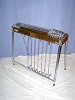
- Posts: 3979
- Joined: 8 Dec 1998 1:01 am
- Location: Solon, Iowa, US
- State/Province: Iowa
- Country: United States
Re: "Keyless" vs. "HeadStock"/"Keyed": A correction about something I believed to be true but wasn't
The only difference that I heard about was the high stress factor, the strings coming back to pitch more accurately when a given string is raised and lowered because of less string behind the nut.
1976 Birdseye U-12 MSA with Telonics 427 pickup, 1975 Birdseye U-12 MSA with Telonics X-12 pickup, Revelation preamp, Ibanez Analog Mini Delay and Hall Of Fame Reverb, Crown XLS 1002, 2- 15" Eminence Wheelhouse speakers, ShoBud Pedal, Effects Pedals. 1949 Epiphone D-8.
-
Bobby D. Jones
- Posts: 3303
- Joined: 17 May 2010 9:27 am
- Location: West Virginia, USA
- State/Province: West Virginia
- Country: United States
Re: "Keyless" vs. "HeadStock"/"Keyed": A correction about something I believed to be true but wasn't
It seems from company to company, Making keyless heads. The dead string length varies by design. And how much tension is put on strings, Before the string is locked down.
Movement of string by changer during lowers and raises, Is the big difference I have found. By the amount of dead string between nut and string anchor point.
When I went keyless. From a MSA Classic S10 with 12 string key head, To a GFI S12 keyless. It was a steep learning curve, Setting up the guitar to Jeff Newman's 12 U tuning.
Movement of string by changer during lowers and raises, Is the big difference I have found. By the amount of dead string between nut and string anchor point.
When I went keyless. From a MSA Classic S10 with 12 string key head, To a GFI S12 keyless. It was a steep learning curve, Setting up the guitar to Jeff Newman's 12 U tuning.
-
Ian Rae

- Posts: 6182
- Joined: 10 Oct 2013 11:49 am
- Location: Redditch, England
- State/Province: -
- Country: United Kingdom
Re: "Keyless" vs. "HeadStock"/"Keyed": A correction about something I believed to be true but wasn't
In my keyless design the adjusters actually form the nut, so that there is zero spare length. They're like miniature changer fingers (see pic).
Anyway, I'm delighted that Bobby has cleared this up and explained it so well!
Anyway, I'm delighted that Bobby has cleared this up and explained it so well!
Make sleeping dogs tell the truth!
Homebuilt keyless U12 7x5, Excel keyless U12 8x8, Williams keyless U12 7x8, Telonics rack and 15" cabs
Homebuilt keyless U12 7x5, Excel keyless U12 8x8, Williams keyless U12 7x8, Telonics rack and 15" cabs
-
J D Sauser
- Moderator
- Posts: 3380
- Joined: 4 Aug 1998 11:00 pm
- Location: Wellington, Florida
- State/Province: Florida
- Country: United States
Re: "Keyless" vs. "HeadStock"/"Keyed": A correction about something I believed to be true but wasn't
Naw, just part of the aging process! One is supposed to become wiser, which is a thing I am still struggling with.
What really got me with the aforementioned matter, is that I was raised by a physics professor, trained a precision mechanics engineer, of all places in Switzerland, and still, I had managed to convince myself of something which I should have understood as wrong, and then went out dancin’ with it like it was a trophy wife!
So, unlike being wrong but quiet about it, you have to go out as publicly and correct it, because “we” try to share KNOWLEDGE, and one doesn’t want to misguide a bunch of people which come here assuming that they can get guidance and information.
Else, why post on here, once you’ve harvested all one could learn on here?
But THANKS for the nice comment, John!… JD
__________________________________________________________
Was it JFK who said: Ask Not What TAB Can Do For You - Rather Ask Yourself "What Would B.B. King Do?"
A Little Mental Health Warning:
Tablature KILLS SKILLS.
The uses of Tablature is addictive and has been linked to reduced musical fertility.
Those who produce Tablature did never use it.
I say it humorously, but I mean it.
Was it JFK who said: Ask Not What TAB Can Do For You - Rather Ask Yourself "What Would B.B. King Do?"
A Little Mental Health Warning:
Tablature KILLS SKILLS.
The uses of Tablature is addictive and has been linked to reduced musical fertility.
Those who produce Tablature did never use it.
I say it humorously, but I mean it.
-
Brint Hannay
- Posts: 3962
- Joined: 23 Dec 2005 1:01 am
- Location: Maryland, USA
- State/Province: Maryland
- Country: United States
Re: "Keyless" vs. "HeadStock"/"Keyed": A correction about something I believed to be true but wasn't
I am not at all educated in the physics of all this, but it appears to me there's a discrepancy between these two statements:
The tension required to bring a string to pitch is determined by:
• Scale length (nut to changer)
• String gauge / mass per unit length
• Target pitch
If the three variables in the first statement each factor into string tension, and in the second statement only two (scale length and target pitch) are the same, wouldn't the difference in string gauge mean a difference in string tension?A 24" scale keyless tuned to E with a .015p has the same string tension as a 24" keyed tuned to E with a .014p.
-
James Collett
- Posts: 396
- Joined: 29 Dec 2007 11:23 pm
- Location: Hacienda Heights, CA
- State/Province: California
- Country: United States
Re: "Keyless" vs. "HeadStock"/"Keyed": A correction about something I believed to be true but wasn't
The tension to bring to pitch will be the same, but keyless guitars would need less travel to change pitch than a keyed guitar, which is more or less a corollary to what's being stated here. The pitch is determined by the tension between the nut and the bridge, but that tension is experienced all the way to the tuning key as well. If we think of a guitar string as a spring, it's intuitive that a shorter spring is stiffer (i.e. produces more tensile force per unit length of stretching). Because of this, a keyless guitar would require less travel to change the pitch between two notes than a keyed guitar, all other variables being equal, even if the resulting tension would be the same between the two guitars.
James Collett
-
J D Sauser
- Moderator
- Posts: 3380
- Joined: 4 Aug 1998 11:00 pm
- Location: Wellington, Florida
- State/Province: Florida
- Country: United States
Re: "Keyless" vs. "HeadStock"/"Keyed": A correction about something I believed to be true but wasn't
If you change any or all; the string GAUGE, or the SCALE LENGTH or the desired “tone”/ FREQUENCY, yes, EVERYTHING changes.Brint Hannay wrote: 5 Mar 2026 12:32 pm I am not at all educated in the physics of all this, but it appears to me there's a discrepancy between these two statements:
The tension required to bring a string to pitch is determined by:
• Scale length (nut to changer)
• String gauge / mass per unit length
• Target pitchIf the three variables in the first statement each factor into string tension, and in the second statement only two (scale length and target pitch) are the same, wouldn't the difference in string gauge mean a difference in string tension?A 24" scale keyless tuned to E with a .015p has the same string tension as a 24" keyed tuned to E with a .014p.
We are talking tension and string “pitch change responsiveness” (travel needed to provoque a defined pitch change) comparing traditionally keyed (with a key-HEAD) vs. “key-less”, the later resulting in a shorter overALL string lenth, but keeping above 3 factors the SAME.
(pardon my use of upper caps, I don’t mean to appear to be screaming “screaming”. I just want to underscore the important terms while answering from my phone on which the use of editing tools is less handy.)
The fact is, all being equal EXCEPT, the lack or excess of extra string legth to the left of a right handed guitar’s nut, the tension is the SAME.
The only two things which change are;
1- elasticity (bigger and thus les ridgid feel on the strings on a traditionally keyed guitar).
2- mechanical travel need to CHANGE pitch (longer on a traditionally keyed guitar).
The third point, would be how that affects tone, sustain, dynsmics (peaks and decay) and overtone “palette”.
… JD.
__________________________________________________________
Was it JFK who said: Ask Not What TAB Can Do For You - Rather Ask Yourself "What Would B.B. King Do?"
A Little Mental Health Warning:
Tablature KILLS SKILLS.
The uses of Tablature is addictive and has been linked to reduced musical fertility.
Those who produce Tablature did never use it.
I say it humorously, but I mean it.
Was it JFK who said: Ask Not What TAB Can Do For You - Rather Ask Yourself "What Would B.B. King Do?"
A Little Mental Health Warning:
Tablature KILLS SKILLS.
The uses of Tablature is addictive and has been linked to reduced musical fertility.
Those who produce Tablature did never use it.
I say it humorously, but I mean it.
-
Matthew Walton

- Posts: 414
- Joined: 30 May 2008 4:35 pm
- Location: Fort Worth, Texas
- State/Province: Texas
- Country: United States
Re: "Keyless" vs. "HeadStock"/"Keyed": A correction about something I believed to be true but wasn't
Yes, I caught that too... frequency is a function of scale length, total string mass, and tension: f = (sqrt((T*L)/m)) / (2L)Brint Hannay wrote: 5 Mar 2026 12:32 pmIf the three variables in the first statement each factor into string tension, and in the second statement only two (scale length and target pitch) are the same, wouldn't the difference in string gauge mean a difference in string tension?A 24" scale keyless tuned to E with a .015p has the same string tension as a 24" keyed tuned to E with a .014p.
So for a constant frequency and scale length, if string size (mass) goes down, tension must also go down.
If something I wrote can be interpreted two ways, and one of the ways makes you sad or angry, I meant the other one.
1981 MSA "The Universal" Bb6 S-12 9/5 | 2024 Excel Robostar Bb6 S-12 8/5 | 2009 MSA SuperSlide C6 S-12 | Peavey Nashville 112
1981 MSA "The Universal" Bb6 S-12 9/5 | 2024 Excel Robostar Bb6 S-12 8/5 | 2009 MSA SuperSlide C6 S-12 | Peavey Nashville 112
-
Dwight Lewis

- Posts: 2483
- Joined: 20 Jun 2008 6:07 pm
- Location: Huntsville, Alabama
- State/Province: Alabama
- Country: United States
Re: "Keyless" vs. "HeadStock"/"Keyed": A correction about something I believed to be true but wasn't
Hi all, I see we are trying to raise a dollar, here's my 2 cents. Since starting my SG journey in 2007, the keyless has been a mainstay in my music room. I'm only UTI graduate of small engines. But I've totally disassembled, refurbished, cleaned, polished a many pedal steelguitar. I've owned the BMI push/pull, Williams keyless, Kline keyless, Sierra and Excel keyless( each having their own mechanical feel due to their design). IMHO, I've noticed the difference in the tension and the difference in mechanical feel of the keyed vs keyless.... there's no doubting this. That extra string behind the nut, giving the 2 scale determining contacts, changes feel. I also notice this, keyless inherently having a different type of sustain character, given all things equal in string quality and size, than keyed. Keyless guitars when strung, lack the twist associated from the typical tuning peg, giving the string better opportunity to " be a string" and vibrate.
Last edited by Dwight Lewis on 13 Mar 2026 12:50 am, edited 1 time in total.
Dekley 7p4k(PRS-10C), BMI S12 5p5kn
-
Brint Hannay
- Posts: 3962
- Joined: 23 Dec 2005 1:01 am
- Location: Maryland, USA
- State/Province: Maryland
- Country: United States
Re: "Keyless" vs. "HeadStock"/"Keyed": A correction about something I believed to be true but wasn't
What I tried to say in my earlier post is that--assuming all the principles that were stated above the quoted sentence are correct--that sentence, as written, is (I assume inadvertently) incorrect. All other things being equal (scale length and target pitch), a .015p and a .014p would not have the same tension.J D Sauser wrote: 3 Mar 2026 8:50 am
A 24" scale keyless tuned to E with a .015p has the same string tension as a 24" keyed tuned to E with a .014p.
This may be beside the point you were making concerning keyed vs. keyless, but introducing a difference in string gauge to the comparison at minimum muddies the point.
-
J D Sauser
- Moderator
- Posts: 3380
- Joined: 4 Aug 1998 11:00 pm
- Location: Wellington, Florida
- State/Province: Florida
- Country: United States
Re: "Keyless" vs. "HeadStock"/"Keyed": A correction about something I believed to be true but wasn't
I am sorry. I just now see that I f’ed up.Brint Hannay wrote: 8 Mar 2026 12:45 pmWhat I tried to say in my earlier post is that--assuming all the principles that were stated above the quoted sentence are correct--that sentence, as written, is (I assume inadvertently) incorrect. All other things being equal (scale length and target pitch), a .015p and a .014p would not have the same tension.J D Sauser wrote: 3 Mar 2026 8:50 am
A 24" scale keyless tuned to E with a .015p has the same string tension as a 24" keyed tuned to E with a .014p.
This may be beside the point you were making concerning keyed vs. keyless, but introducing a difference in string gauge to the comparison at minimum muddies the point.
I meant to write o.o14p in both cases, gauge, scale and note (frequency) being the SAME with only the excess string length left of the nut being the only variable.
I now only understand why some are bringing up different string gauges.
I will correct the original post.
… JD.
__________________________________________________________
Was it JFK who said: Ask Not What TAB Can Do For You - Rather Ask Yourself "What Would B.B. King Do?"
A Little Mental Health Warning:
Tablature KILLS SKILLS.
The uses of Tablature is addictive and has been linked to reduced musical fertility.
Those who produce Tablature did never use it.
I say it humorously, but I mean it.
Was it JFK who said: Ask Not What TAB Can Do For You - Rather Ask Yourself "What Would B.B. King Do?"
A Little Mental Health Warning:
Tablature KILLS SKILLS.
The uses of Tablature is addictive and has been linked to reduced musical fertility.
Those who produce Tablature did never use it.
I say it humorously, but I mean it.
-
Dwight Lewis
- Posts: 2483
- Joined: 20 Jun 2008 6:07 pm
- Location: Huntsville, Alabama
- State/Province: Alabama
- Country: United States
Re: "Keyless" vs. "HeadStock"/"Keyed": A correction about something I believed to be true but wasn't
MrJD, it's just a Lil Typo.... we are clear and I'm learning alot on this thread. Lamar Colvin designed a straight pull changer and keyless head. The strings didn't bend around a bridge, but the changer pulls the straight straight to the right of the guitar, effectively changing your scale length, I would venture to say. Total different string feel.
Dwight
Dwight
You do not have the required permissions to view the files attached to this post.
Last edited by Dwight Lewis on 9 Mar 2026 8:08 am, edited 1 time in total.
Dekley 7p4k(PRS-10C), BMI S12 5p5kn
-
Robert Miller
- Posts: 66
- Joined: 5 Nov 2025 11:45 pm
- Location: Jelm
- State/Province: Wyoming
- Country: United States
Re: "Keyless" vs. "HeadStock"/"Keyed": A correction about something I believed to be true but wasn't
If I'm understanding correctly:
The distance between the nut and the changer in concert with the string gauge determines the exact tension required to reach a given pitch.
The fly in the ointment becomes pedal and lever changes because that involves the total mass of the string being stretched a particular distance to reach a particular tension between those points, the longer (keyed) string requiring more travel due to more overall mass.
Is that correct?
Assuming that is the case, the real question seems to become, "How much practice does it take to acclimate to the difference in travel, and does it make a sonic/functional difference once the player is acclimated?"
I'm betting that practice outruns the difference in a matter of hours, if not minutes.
The distance between the nut and the changer in concert with the string gauge determines the exact tension required to reach a given pitch.
The fly in the ointment becomes pedal and lever changes because that involves the total mass of the string being stretched a particular distance to reach a particular tension between those points, the longer (keyed) string requiring more travel due to more overall mass.
Is that correct?
Assuming that is the case, the real question seems to become, "How much practice does it take to acclimate to the difference in travel, and does it make a sonic/functional difference once the player is acclimated?"
I'm betting that practice outruns the difference in a matter of hours, if not minutes.
Emmons setups are AB-Normal, C? I can do this all Day.
-
J D Sauser
- Moderator
- Posts: 3380
- Joined: 4 Aug 1998 11:00 pm
- Location: Wellington, Florida
- State/Province: Florida
- Country: United States
Re: "Keyless" vs. "HeadStock"/"Keyed": A correction about something I believed to be true but wasn't
Yes, you are essentially understanding it correctly, with one small clarification.Robert Miller wrote: 9 Mar 2026 8:02 am If I'm understanding correctly:
The distance between the nut and the changer in concert with the string gauge determines the exact tension required to reach a given pitch.
The fly in the ointment becomes pedal and lever changes because that involves the total mass of the string being stretched a particular distance to reach a particular tension between those points, the longer (keyed) string requiring more travel due to more overall mass.
Is that correct?
Assuming that is the case, the real question seems to become, "How much practice does it take to acclimate to the difference in travel, and does it make a sonic/functional difference once the player is acclimated?"
I'm betting that practice outruns the difference in a matter of hours, if not minutes.
The tension required to bring a string to pitch is determined only by:
• scale length (nut to changer ONLY)
• string gauge / linear density
• the pitch
So two guitars with the same scale and string gauge tuned to the same note will have the same string tension whether they are keyed or keyless.
Where the difference comes in is during pitch changes with pedals and levers.
When a changer raises or lowers a string, it increases or decreases the string’s tension. To do that, the mechanism must stretch the string a certain amount. The amount of stretch required depends on how much total elastic string length exists in the system.
A keyed guitar has additional string length behind the nut (and sometimes behind the changer). That extra length adds elasticity to the system. As a result, the changer must move the string a little farther to produce the same pitch change.
A keyless guitar has very little string length outside the speaking scale, so the system contains less elastic material. The same pitch change therefore requires slightly less changer travel and the feel can be a bit “stiffer” or more immediate.
So the difference is really about total elastic length, not about the mass of the extra string.
As to your second question — in practical terms most players adapt extremely quickly. The actual differences in travel are small, and experienced players tend to adjust within minutes.
Many excellent players perform on both keyed and keyless instruments without any functional disadvantage once they acclimate. At that point it becomes mostly a matter of mechanical preference and feel rather than a sonic limitation.
If you have a given scale length, gauge and pitch, the string may be long or short on either or both side (to the left of the nut and/or the right of the bridge), the tension will always be the same.
In other words, it's NOT the string's OVERALL length but only the scale length (keeping gauge and frequency the same) which will determine TENSION.
Keyhead guitars, because of the added ELASTICITY of the longer OVERALL string length tend to be perceived as feeling softer on the strings. I play Keyheaded and KeyLESS steels and migrate from one to the other easily. After a day, I got about the same tone.
There is one last question to discuss, which is "TONE".
Keyless guitars' strings feel "harder" because the lesser elasticity of the shorter (OVERALL) string lengths. This must in some way affect tone, dynamics etc too.
Related to that is the question of what happens with the vibrations exciting the string lengths inside the keyhead and how they feed that energy back into the string section inside the scale, underneath the left hand and even the bar (?), while, in comparison, this won't happen on a keyless guitar because of the obvious lack of string length to the left of the nut.
One reason, why Bud Carter (MAS and later CARTER Steel Guitars) refused to build a keyless PSG, arguing that without the string section inside a keyhead, one would have a hard time to "control the overtones". Bud Carter is sadly missed and so, we can't ask him what EXACTLY he meant with "hard time to control overtones". But I am CERTAIN that the choice of tuning system affecting the presence of string length vibrating or not on the left of the nut DOES affect TONE and dynamics at least... maybe even sustain.
HOW? I couldn't even say if favorably or not either way.
... J-D.
__________________________________________________________
Was it JFK who said: Ask Not What TAB Can Do For You - Rather Ask Yourself "What Would B.B. King Do?"
A Little Mental Health Warning:
Tablature KILLS SKILLS.
The uses of Tablature is addictive and has been linked to reduced musical fertility.
Those who produce Tablature did never use it.
I say it humorously, but I mean it.
Was it JFK who said: Ask Not What TAB Can Do For You - Rather Ask Yourself "What Would B.B. King Do?"
A Little Mental Health Warning:
Tablature KILLS SKILLS.
The uses of Tablature is addictive and has been linked to reduced musical fertility.
Those who produce Tablature did never use it.
I say it humorously, but I mean it.
-
Robert Miller
- Posts: 66
- Joined: 5 Nov 2025 11:45 pm
- Location: Jelm
- State/Province: Wyoming
- Country: United States
Re: "Keyless" vs. "HeadStock"/"Keyed": A correction about something I believed to be true but wasn't
J. D.,
I think we're violently agreeing.
Your statements vis a vis, the coalescence of string gauge (assuming a fixed string material, giving a particular linear density at a given diameter), length from bridge to changer, and tension dictating pitch are implicit. The rest is fundamentally a restatement.
My point was somewhat tongue-in-cheek.
The two parallels I can make are the wars over "Top Wrapping" a Les Paul tail piece and through body Telecaster stringing and top loaders.
"What sounds better on a Tele, a '59 style top loader bridge or a string through bridge?"
Thinks a minute...
"Practice....Lots and lots of very meticulous practice sounds better."
I think we're violently agreeing.
Your statements vis a vis, the coalescence of string gauge (assuming a fixed string material, giving a particular linear density at a given diameter), length from bridge to changer, and tension dictating pitch are implicit. The rest is fundamentally a restatement.
My point was somewhat tongue-in-cheek.
The two parallels I can make are the wars over "Top Wrapping" a Les Paul tail piece and through body Telecaster stringing and top loaders.
"What sounds better on a Tele, a '59 style top loader bridge or a string through bridge?"
Thinks a minute...
"Practice....Lots and lots of very meticulous practice sounds better."
Emmons setups are AB-Normal, C? I can do this all Day.
-
Bobby D. Jones
- Posts: 3303
- Joined: 17 May 2010 9:27 am
- Location: West Virginia, USA
- State/Province: West Virginia
- Country: United States
Re: "Keyless" vs. "HeadStock"/"Keyed": A correction about something I believed to be true but wasn't
This is 1 of the longest dead strings in a keyed head. S10 MSA Classic S10 with 12 string key head which adds about 1 1/2 inches extra dead string compared to a 10 string key head.
This is 1 of the shortest keyless dead strings GFI Keyless. No rollers in the nut, Just a chromed rod. (When I bought this guitar I drew plans for rollers in the nut, Does not need rollers.) These strings are near Change time and only have about 3/8" To 1/2" dead string.
You do not have the required permissions to view the files attached to this post.